


One of the questions I get asked most often is:
“What’s the recruitment market like right now?”
Usually, the expectation is that something dramatic has changed. In reality, the fundamentals haven’t changed at all.
If you want strong technical or commercial people, hiring has always been competitive. Good candidates have always been difficult to find. Skilled engineers, project professionals, technical salespeople and operational leaders were never sitting around waiting for job adverts.
That has been true for decades.
What has changed is the environment around hiring.
The market has become noisier, riskier, and significantly harder to assess.
And in my view, there are four major reasons why.
1. The market is louder than ever
There are now more job adverts, more recruiter outreach, more LinkedIn messaging, and more competition for skilled talent than ever before.
At the same time, new and emerging sectors are creating fresh demand for technical people — often with strong salaries attached.
Infrastructure, automation, utilities, energy transition, industrial technology and advanced manufacturing are all competing for similar technical skill sets.
This creates a simple problem:
Strong candidates have more choice.
Yet more activity does not necessarily mean more quality.
One of the biggest misconceptions in hiring is that more applications equals a stronger talent pool.
In reality, more applications often just means more filtering.
2. Hiring risk has increased
Hiring decisions are becoming more commercially important than ever.
Recent employment legislation is increasing the level of risk attached to getting a hire wrong.
Under the Employment Rights Act 2025, the qualifying period for ordinary unfair dismissal is reducing from two years to six months of continuous service, meaning employers may face unfair dismissal claims far earlier than previously.
At the same time, potential employer liability in unsuccessful tribunal cases may become significantly more substantial.
This means businesses will inevitably become more focused on:
- Strong probation processes
- Clear performance documentation
- Fair process and evidence gathering
- Early performance management
- Better hiring decisions from the outset
The reality is simple:
Bad hires are becoming more expensive.
And the commercial consequences of getting recruitment wrong are increasing.
3. Economic pressure is creating stagnant talent
There is significant pressure on many businesses right now.
Across engineering and technical sectors, many organisations have slowed hiring, reviewed costs, or undertaken restructuring exercises.
When businesses assess headcount, difficult decisions are often made around:
- contribution
- future value
- productivity
- commercial impact
- overall cost to the business
At the same time, uncertainty changes employee behaviour.
Even highly employable people become more cautious.
Strong performers often stay put unless an opportunity feels materially better, more secure, or clearly aligned to their long-term future.
This creates what I would describe as stagnant talent.
The strongest people are still there - but they are less visible, less active, and less likely to apply for jobs.
For businesses operating in specialist engineering markets, this matters.
Because the talent you often need is passive talent.
The best candidates are frequently already performing well elsewhere.
They are unlikely to be found through job adverts alone.
They need to be identified, approached correctly, and engaged with a compelling opportunity.
4. AI has changed hiring forever
This is the big one.
Artificial intelligence has fundamentally changed the hiring process — but not always in the way people expected.
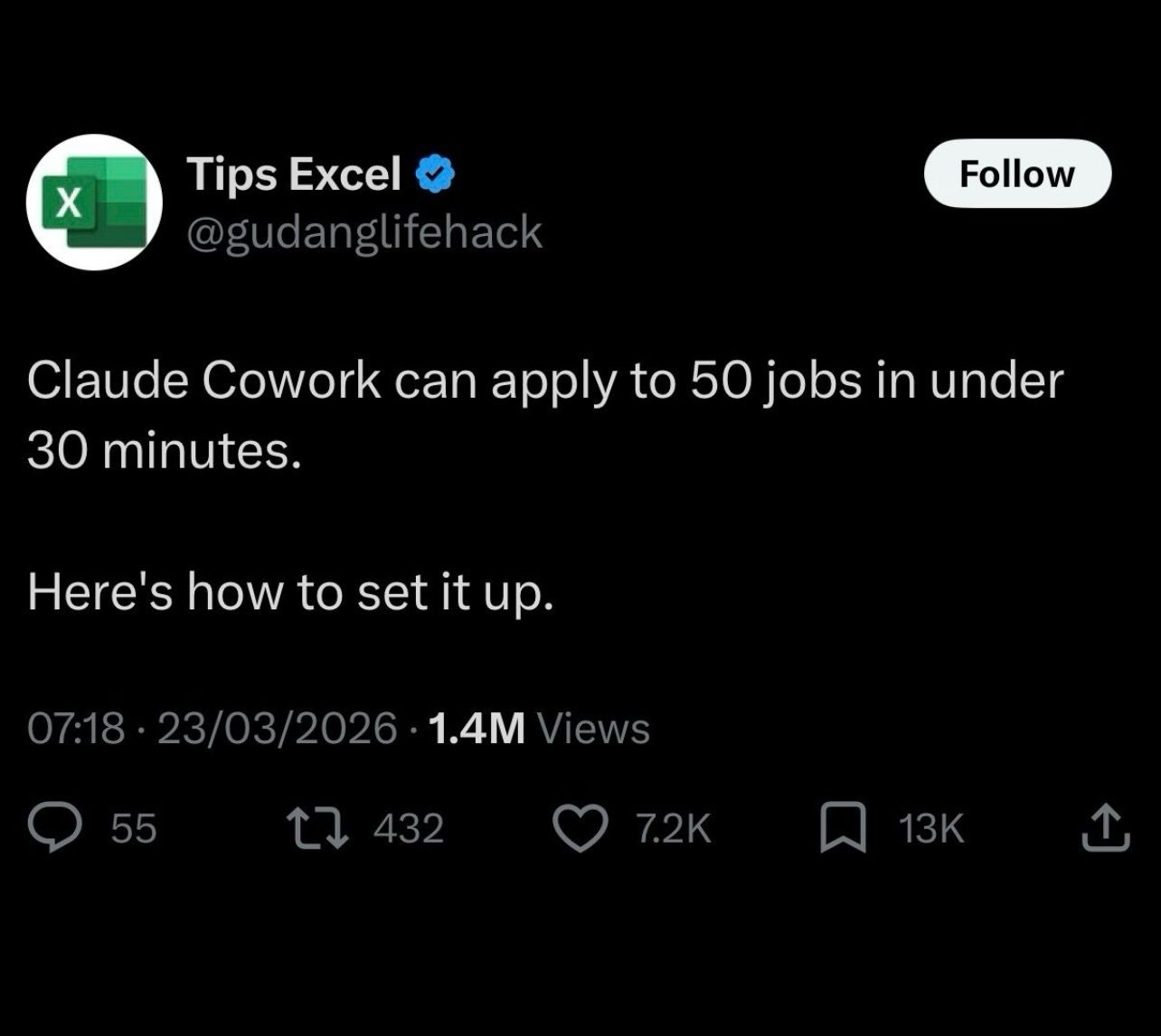
The problem is not that AI is replacing jobs overnight.
The real problem is this:
Everyone is starting to look and sound the same.
CVs are polished.
LinkedIn profiles are optimised.
Applications are professionally written.
Interview answers are rehearsed.
Job descriptions increasingly look identical.
The result?
It has become harder to separate genuinely strong candidates from people who simply present well.
In many cases, it is now easier to hire someone who interviews brilliantly — but underperforms once in role.
And that creates a dangerous problem:
Presentation is becoming easier to manufacture than substance.
Filtering capability is now more important than sourcing capability.
The real skill is no longer just finding candidates.
It is identifying who is genuinely capable beneath the polished profile.
So what should businesses do differently?
In my opinion, hiring in 2026 requires a different mindset.
Hire beyond the CV
A polished CV tells you very little on its own.
Focus less on adjectives and more on evidence.
Focus on outcomes, not claims
Ask questions around:
- revenue delivered
- projects completed
- operational improvements
- cost savings
- engineering delivery
- stakeholder influence
Look for proof, not positioning.
Use scenario-based questioning
Instead of asking generic competency questions, test judgement.
Ask:
“What would you do if…”
Strong candidates tend to go deeper, explain trade-offs, and speak from experience.
Weak candidates often stay high level.
Probe depth
Good interviewers don’t stop at the first answer.
Keep digging.
Ask follow-up questions.
Test technical depth, decision-making, and understanding of consequences.
Because in today’s market, surface-level answers are easier than ever to manufacture.
Final thoughts
Despite all the noise, the fundamentals remain the same.
Strong talent has always been competitive.
The difference today is that hiring has become:
noisier, riskier, and harder to assess.
And with AI making candidates appear increasingly polished on paper, the ability to filter effectively may become one of the most valuable hiring skills businesses develop over the next few years.
The challenge is no longer just attracting talent.
It is identifying who is genuinely capable once they arrive.
If you’ve made it this far and enjoyed my ramble, feel free to connect with our company page on LinkedIn.
And if we can support your business with a hire - or simply offer advice on your next career move - feel free to drop a message through the contact page. Always happy to have a conversation.
Back to Blog